
Tuesday, July 17, 2012

SCHOOL CHOICE

Last fall my daughter started Kindergarten and the reality hit me like a ton of bricks. As a parent I was processing a myriad of emotions and as an educator, I am acutely aware of the importance of a proper placement. In addition to ruminating over the warp speed of the last five years, I became immersed in data and inundated with paperwork for school admissions, open enrollment, charter school lotteries and private school applications. Here’s what I took away from my weeks of soul and school searching.

First visit your school district’s main office. It is a good place to start your research because they will have information on all the public schools in your district. When deciding on a school, assess your family’s requirements, especially if there are any special needs. The most common inquiries include; is there before and/or after school care provided and at what cost? Is transportation available? Are friends or siblings attending the same school? In case you decide on a school outside of your designated one, ask about the procedure for an intradistrict transfer.

I highly recommend visiting a school of interest. If a school isn’t friendly about a pre-enrollment visit, that might be a sign of how they’ll respond when you’re a parent there.

While at the school, try to meet the principle, vice principle, teachers and any parents helping around campus. Check out the work on the walls, overall cleanliness, and how adults and children interact. Also, ask what type of involvement the school wants from parents.

You may also want to ask:

What extra-curricular activities and outreach programs are available?
How much homework is assigned?
How are behavior problems handled?
Is there a dress code?
Is there a handbook?
What is the deadline for enrollment?
Are there any other dates that need to be adhered to?
What is the student-to-teacher ratio?
What is the school’s API (Academic Performance Index) score?

I warn against getting too caught up in the numbers. While a high API is telling (a preferred score is anything over 800) there are other considerations to a well-rounded education. I find, as a public school teacher, that the emphasis on scores has become so significant that teaching the test often becomes a primary goal. I believe the love of learning needs to be at least as important.

To compare schools in your area, you can go to www.schooldigger.com. Great Schools, www.greatschools.org, also rates schools and has lots of other information and advice for parents.

Make sure you’ve got all the necessary documentation when the time comes to enroll. Public schools will require proof of residency, a copy of your child’s birth certificate and vaccination records. Parochial schools may ask for additional information regarding religious affiliation and documentation.

If you are looking at private schools, there may be extra steps required, like interviews, testing and letters of recommendation. If you are concerned about the expense, inquire about financial assistance.

It’s always better to be safe than sorry, so have a backup plan. Have a second or even third school choice.  

Getting your child in the right school is only half the battle. Staying actively involved and communicating often with your child and his teacher is also key to academic success.

Friday, July 13, 2012

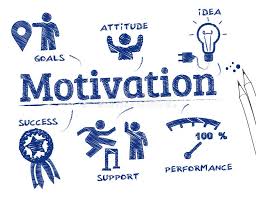
WHAT IS THE RELATIONSHIP BETWEEN MOTIVATION AND LEARNING?


With so much attention on test scores and budgetary concerns, it's refreshing to learn some folks are keeping their focus on what matters most to parents and teachers - figuring out the best practices to
motivate and educate children.

In 2007, Redwood City School District and Stanford's John W. Gardner Center continued a longstanding partnership in their efforts to gain a deeper understanding of the practices that effectively promote student motivation, engagement, and ultimately, achievement.

They surveyed all Redwood City School District middle school students in the spring of 2009 and again in 2010 regarding their experiences in their classrooms and their beliefs about themselves as learners.

The research is ongoing and they have already completed a third round of data collection this month. They have learned some interesting and encouraging information about the relationship between student's classroom experiences, motivational beliefs, and academic achievement.

The data clearly showed that a safe and caring setting is the ideal climate for learning. Caring classrooms have students that treat each other with respect and teachers who foster this by letting students know they
are not allowed to make fun of each other for a wrong answer or mistake, stating that mistakes are part of the learning process.

They also set aside time for individual conferences and provide individual feedback regarding the student's growth and areas for improvement (versus public feedback that make comparisons between students) and create opportunities for students to revise their work, give private feedback about
grades and also time for students to work with each other.  These classrooms tend to inspire student motivation and benefit all students, especially and inclusive of low-income students.

Test scores back up these results. The JGC analysis showed that there is a relationship between higher motivation and higher achievement evidenced by elevated California State test scores. This is true for all
students - regardless of prior achievement. This means that if teachers can improve student motivation, then they are also very likely to see improvements on standardized tests.

The JGC staff are encouraged by the outcomes hitherto.

"These results remind us that motivation is not a static trait. Motivation is not something that a student simply has or does not have. Rather motivational beliefs are malleable and very responsive to classroom
practices. Perhaps even more exciting is the evidence that students' motivational beliefs can shift within the course of less than one academic year. It is also important to highlight that these motivating and caring
practices are doable and already present in many classrooms in Redwood City. We hope these findings will serve as a catalyst for more reflection and conversations between researchers, teachers and parents about specific strategies for motivating students to deeply engage in their learning."

When planning the school year administrators and teachers should, in conjunction with analyzing and disaggregating test scores, have another conversation. Is the designated curriculum backed up with constructive strategies and teaching practices that improve proficiency as well as foster curiosity in a welcoming environment? What does that classroom look like?

Monday, July 9, 2012

BUSTING THE SUMMER TIME BLUES!


Good News! There IS a cure for the summer time blues. In fact, there are loads. Stop the “I’m bored!” lament by engaging the kids in activities that are chock-full of art, science, math and other smart lessons.

Inspire the next Ansel Adams. If you don’t trust your children with the digital camera, buy some disposable ones. Send them clicking around the neighborhood and your house - just not inside the neighbor’s house! After developing, pick some favorites and make a thematic scrapbook.

Teach the kids some entrepreneurial skills by helping them set up a lemonade stand at the front of your driveway, or have them go into business with a friend who has a better location. A lemonade stand is a lot more fun to run with a buddy. Having big brother or sister help is a good choice too. Prove the importance of advertisement by plastering leaflets around the neighborhood, including times and dates. Rip up an old box and construct a capacious, colorful, cardboard sign in front of the stand with prices and products available. Charge a lot, giving a break to seniors and kids. Adults, even in these difficult economic times, won’t bicker about paying a buck instead of 75 cents; especially if you’re giving part or all of the money to charity. Offer cookies and brownies to sweeten the deal and increase income. Running the stand for two days will allow kids to learn from mistakes. Saturday and Sunday are ideal.

Retro the whole families’ wardrobe by creating some tie-dyes t-shirts. In the garage (or somewhere else that can get real messy) twist a wet t-shirt and tie it with rubber bands. Put on some rubber gloves and mix ½ cup of liquid dye in a quart of hot water or follow the directions on the back of a of Rit dye box. Go to www.ritdye.com and click on tie-dyeing for some cool patterns and creative designs. Soak for about twenty minutes then rinse in cold water until the water runs clear. Take off the rubber bands and rinse again. Hang the shirt out to dry in the sun.

Instead of putting a message in a bottle, spread lots of love by putting messages in balloons. Brainstorm a bunch of positive, inspiring messages like, “the best things in life are free.” or “all you need is love” and insert the messages into helium balloons. You can rent a helium tank at any party supply store. Tie them up and let em’ loose. 

Give back to the community. Advocating charity and compassion at an early age is truly priceless. It also nurtures the appreciation of your family’s fortunate status. Help your kids help an elderly neighbor with house or yard work, contact your local church, senior center or go to www.thevolunteercenter.net for other volunteering opportunities in the bay area.

These are just a few suggestions that have a bit of an educational bend. Whatever your family decides to do, do it with enthusiasm, love and kindness. Summertime is brief, and within a blink of an eye your little ones will be all grown up. Just ask your parents.

Friday, June 29, 2012

A QUEST FOR INDEPENDENCE


From the cradle to the grave, we are continually trying to obtain and protect our autonomy. The innate yearning for independence is indeed the reason we fought the Revolutionary War and why our founding fathers wrote America’s most sacred document, the Declaration of Independence. This Fourth of July, we will celebrate America’s 236th year of independence. As a teacher and parent I often reflect on children’s need for the same.
Allowing children to develop independence fosters social competence, emotional confidence, financial know-how, self-reliance and a host of other beneficial life skills. As a result, many books and articles have been written suggesting various techniques and methods for building children’s independence. From my readings, I procured five pointers that are practical and easy to implement.
Communication


Every time you do something for your child, whether it be tying their shoe or writing them a check, explain part or all of the process. When they are practicing a new skill, furnish lots of praise. Also, create plenty of opportunities for children to share their opinions and views whether about the playground or politics and whether you agree with their opinion or not.
Practice
Practicing various skills lead to good habits. For instance, have your kids practice conversing with adults, starting with you. First model, then have them order food at a restaurant, ask for help from other adults (eg, their teacher or a police officer). Together, offer to help an older neighbor or younger child and reiterate the importance of good manners with every endeavor.
Making Lists
Share your shopping list and other ‘to-do’ lists. Get kids into the habit of making their own by facilitating homework, chore, and wish lists. Have the whole family make lists of future goals and post them on the fridge.

Doing Chores
A chore chart is useful and you can make your own. First, list things that need to be done to keep your home running smoothly (ex, make beds, clear or set the table, fold the laundry, etc). Then, assign the chores to each family member with a proper allowance attached. If children are old enough to ask for money, they are old enough to earn it. More importantly, children who make and manage their own money learn to make better decisions. Finally, call a family meeting to explain the chart and place it in somewhere for all to see.
Making Choices
Always give the kids a choice. You can keep it simple by only allowing two options - the blue or red shirt, or the chocolate or strawberry ice cream. Allow kids to make mistakes. Lessons are learned when errors are made and corrected. Unless the consequences are dire, accept the blunder and demonstrate how to gracefully accept mishaps. Then, brainstorm solutions.
The pay off? The more independent your children become, the more freedom you have. I hope these few tips are helpful and I wish you and your family a happy Independence Day with a house full of self-sufficient, self-reliant, confident, and well-adjusted individuals.

Thursday, June 28, 2012

A TALE OF TWO CALIFORNIAS


Charles Dicken’s classic novel, A Tale of Two Cities opens with the lines, “It was the best of times; it was the worst of times.” This historic fiction tells the plight of a revolting underclass and their thirst for equality. The ambivalence of French aristocrats toward the impoverish peasants is ominously similar to California’s elected officials ambivalence toward our impoverished public education system. For far too long, officeholders on both sides of the isle have recklessly razed public education through underfunding schools and demoralizing teachers.

California continues to be the 9th largest economy in the world. Our academic standards are among the most rigorous in the country yet our investment in education is among the lowest. We rank 46th among 50 states in per-student spending.

The funding discrepancy among school districts in San Mateo County is blaringly unbalanced. For example, according to Ed-Data.org, per-pupil state and local revenues for Millbrae school district for the 2009-2010 school year was $6,747. Hillsborough school district was more than double that, spending $13,966 per student.

To add insult to injury, on March 15th more than 1,500 teachers in the greater Bay Area and nearly 20,000 teachers statewide received pink slips, the equivalent of a lay off notice.

Cynthia Dolmacio is a 16-year veteran teacher with three children. This is her fourth year in a row receiving a pink slip from the Brisbane School District. “I grew up [in Brisbane] and attended our public school as do my own three children,” she said. “After teaching 12 years in another district, I came here to be a more integral part of our children’s education.”

Unfortunately, her efforts to support her community have not been reciprocated. “Each fall I set up a classroom for a year filled with learning and joy [and] at the end of each school year, I pack it all up and haul it all home…this affects not only me and my own family but affects our whole community. Each year I form bonds with my students, their families and my colleagues and each year it ends in tears.”

Teachers, administrators, and classified staff have worked tirelessly to make up for the budget shortfalls but news of more teacher layoffs, more kids crammed into a classroom and the elimination of librarians, school nurses, counselors, coaches and every extra-curricular education program is despairing and disgraceful.

No one is advocating for a revolt on the scales of the French Revolution, however, this blatant punishing of educators and the children they teach needs to be addressed and corrected so that all our children receive a high quality education, not just those whose parents have deep pockets. There is a Chinese proverb that moralizes, “Tell me and I’ll forget; show me and I may remember; involve me and I’ll understand.” California representative have been told of the devastation their cuts have inflicted. They have been shown the disproportion of funding. Now, we must get involved. For more information on San Mateo County elected officials, voter registration, voting options and more, visit www.shapethefuture.org. To contact State Superintendent of Public Instruction, Tom Torlakson, or the California State Board of Education members, go to www.cde.ca.gov. To learn about the efforts made by the California Teacher’s Association, visit, www.cta.org.


Tuesday, June 26, 2012

SUMMER HUNGER


Most kids now free from the shackles of formal education: sleeping in, playing all day and eating at their leisure. However, there are many children whose summer does not have such appealing prospects. They are anxious. Not attending school means not knowing where their next meal is coming from and there are thousands, yes, thousands in San Mateo County.

Eight-year-old Angela is one. “My parents both work but they don’t get paid very much. With the rent, we can’t pay for food,” she said. “It’s hard for us. There was this time when I came home from school I was really hungry but there wasn’t anything to eat.  When you’re hungry it feels bad. I was kind of worried.”

According to California Food Policy Advocates’ 2010 Nutrition and Food Insecurity Profile for San Mateo County, 19,520 students in San Mateo County participate in the free or reduced-price lunch program and 7,015 students participate in the free or reduced-priced breakfast program.

Whatever your views on subsidies school lunch and breakfast programs; you have to agree with Angela, when you’re hungry, it does feel bad. Fortunately, San Mateo County has the Second Harvest Food Bank. They will provide food to more than 35,000 children in San Mateo County this summer.

Second harvest Food Bank launched its Share Your Lunch campaign this month to raise awareness about childhood hunger during the summer and ensure that local children get enough to eat. “Childhood hunger is a serious problem that can hamper children’s healthy growth and development, which affects their ability to do well in school,” said Kathy Jackson, CEO of Second Harvest Food Bank of Santa Clara and San Mateo Counties. “We want to make sure children have enough nutritious food to eat this summer so they can stay healthy and start school in the fall ready to learn.”

How can we help this magnanimous program that safeguards our less fortunate neighbors?

According to spokesperson Caitlin Kerk, the community can join Second Harvest in preventing childhood hunger this summer by supporting Share Your Lunch. They can give online at www.SHFB.org or by calling 866-234-3663. Every $10 donated provides a meal for 20 children.

“I really love the food from the Food Bank,” said Angela. “It’s great because now we get to eat and pay the rent. I don’t worry as much and get to eat when I come home from school. My favorite food is a turkey sandwich with toasted cheese. I put a pear in there when my mom’s not looking!”

Families who are concerned about feeding their children this summer can call Second Harvest Food Bank’s Food Connection hotline at 800-984-3663 to learn about food assistance programs that can help.

LET'S TALK ABOUT SEX!


Teaching middle school brings new, poignant meaning to the adage “Spring is in the air!”  This week, my eighth grade students are receiving compulsory edification of the birds and the bees. I’m mighty grateful I’m not the instructor. Teaching sexual education to pubescent young adults is not desirable, but is nevertheless necessary.

Parents agree. A survey of California parents conducted by the Public Health Institute found that 89% of California parents – including 86% of evangelical Christians and 71% of people who self-identify as “very conservative” – support sex education that includes instruction about both abstinence and contraception. This support is consistent across racial and ethnic groups.

If you are part of this 89% then you will want to become familiar with BACHE (Bay Area Communities for Health Education). They have released an online “Parent Toolkit” that includes 9 steps necessary to get comprehensive sex-education implemented in your child’s school. The Toolkit is available on BACHE’s website athttp://bacheinfo.org/Toolkit.

The information is enlightening and empowering. For example, California law prohibits abstinence-only sex education in public schools. In spite of this, there are many school districts in the Bay Area that are not complying.

Since 1992, the state has required all public schools to teach HIV/AIDS prevention education. Sex education, also known as family life education, is not required, but if schools choose to teach it, they must satisfy certain requirements. Under California Education Code, sex education in public schools must be science-based, medically sound, free of bias and age-appropriate. If parents do not want their children to receive sex education, they can withdraw them from instruction.

As a parent, you have the right to review all school materials relating to sex education. Materials to request include any books, pamphlets and any other curricula used during instruction. Simply ask the administrator for lesson plans. You can also consider any school board policies and administrative regulations regarding sexual health education.

It is also a good idea to supplement at home. According to With One Voice 2012 (WOV2012), in a series of national surveys commissioned and released by The National Campaign to Prevent Teen and Unplanned Pregnancy, teens continue to say that parents have the most influence on their decisions about sex. For more statistical information and other resources, go to www.thenationalcampaign.org.

I believe a well planned, comprehensive sex education course should assist teens in formulating healthier relationships and healthier decisions. If done properly, it should include curriculum that incorporates decision-making skills, includes information about condoms and contraception, and details the benefits of delaying sexual activity. This type of sex education has proven to be effective and is endorsed by the American Medical Association.

Still a bit uneasy and skeptical? Perhaps renowned pediatrician and author Dr. Benjamin Spock can put it in perspective.

“Does sex education encourage sex? Many parents are afraid that talking about sex with their teenagers will be taken as permission for the teen to have sex. Nothing could be further from the truth. If anything, the more children learn about sexuality from talking with their parents and teachers and reading accurate books, the less they feel compelled to find out for themselves.”